> For the complete documentation index, see [llms.txt](https://docs.inogic.com/llms.txt). Markdown versions of documentation pages are available by appending `.md` to page URLs; this page is available as [Markdown](https://docs.inogic.com/whatsapp4dynamics/configuration/copy-url-from-power-automate-flow.md).
# Copy URL from Power Automate Flow
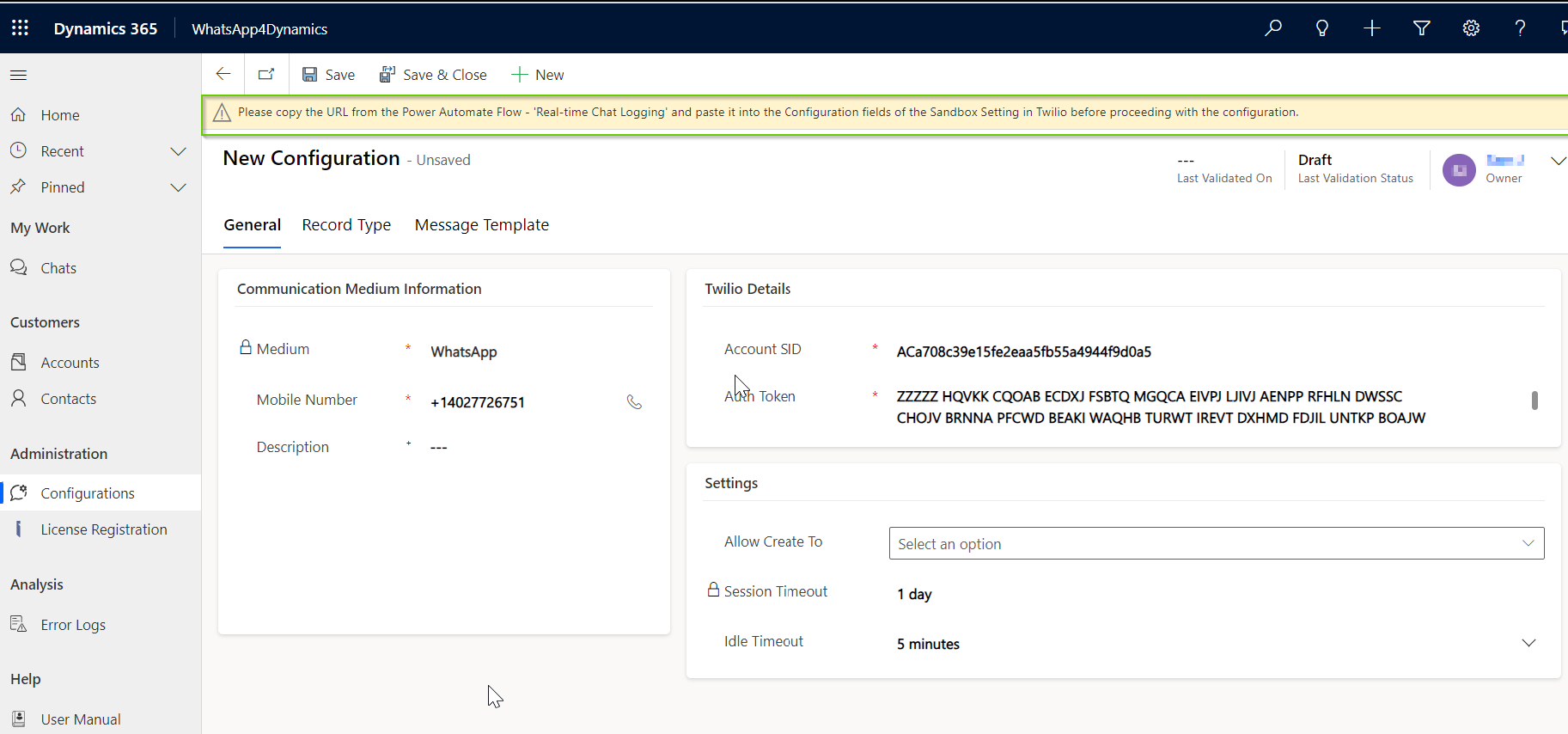
Before proceeding with the Configuration, you need to copy the URL of Power Automate Flow – “**Real-Time Chat Logging**” which is shipped in our solution and paste it into the Configuration field of Sandbox Setting in Twilio.
{% hint style="info" %}
**Note: If this step is not performed, you will not be able to receive any messages on the CRM.**
{% endhint %}
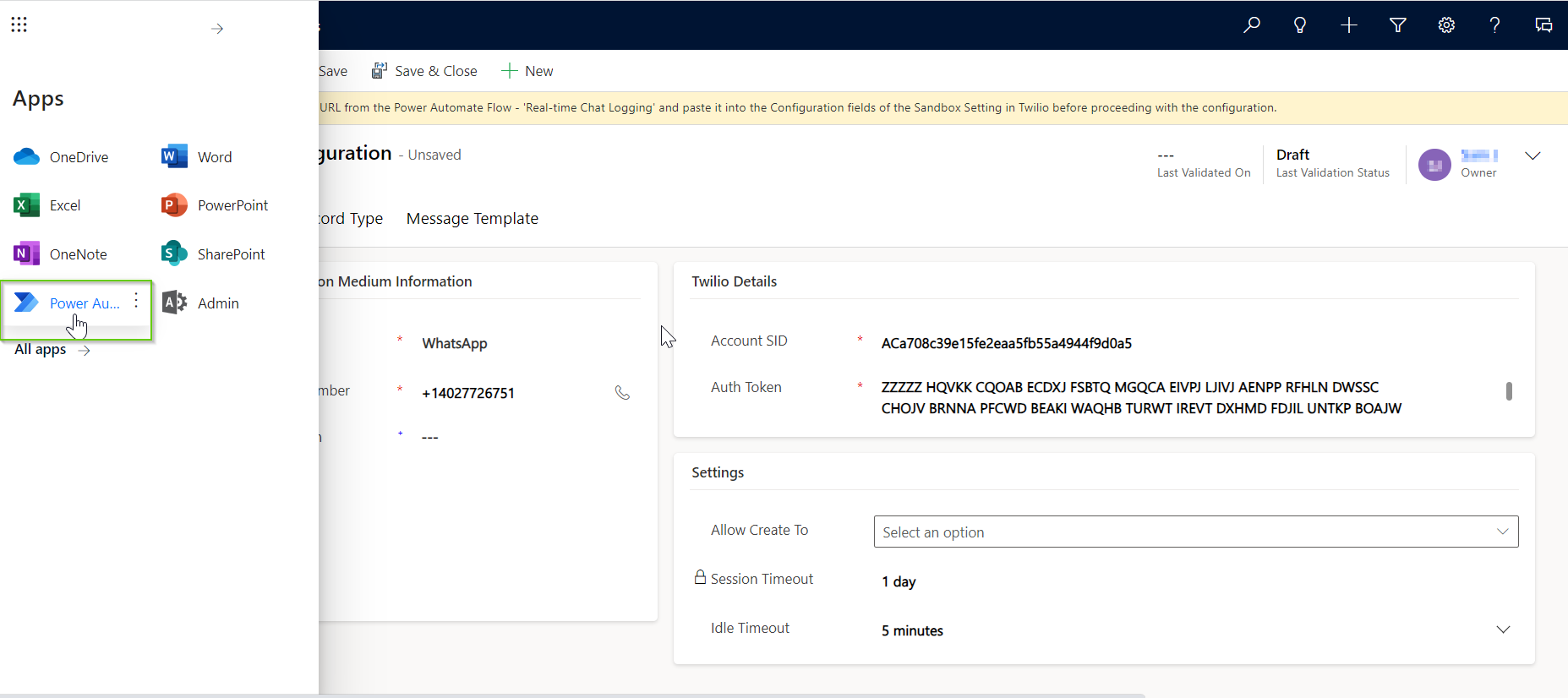
* Go to **Power Automate** in Dynamics 365.
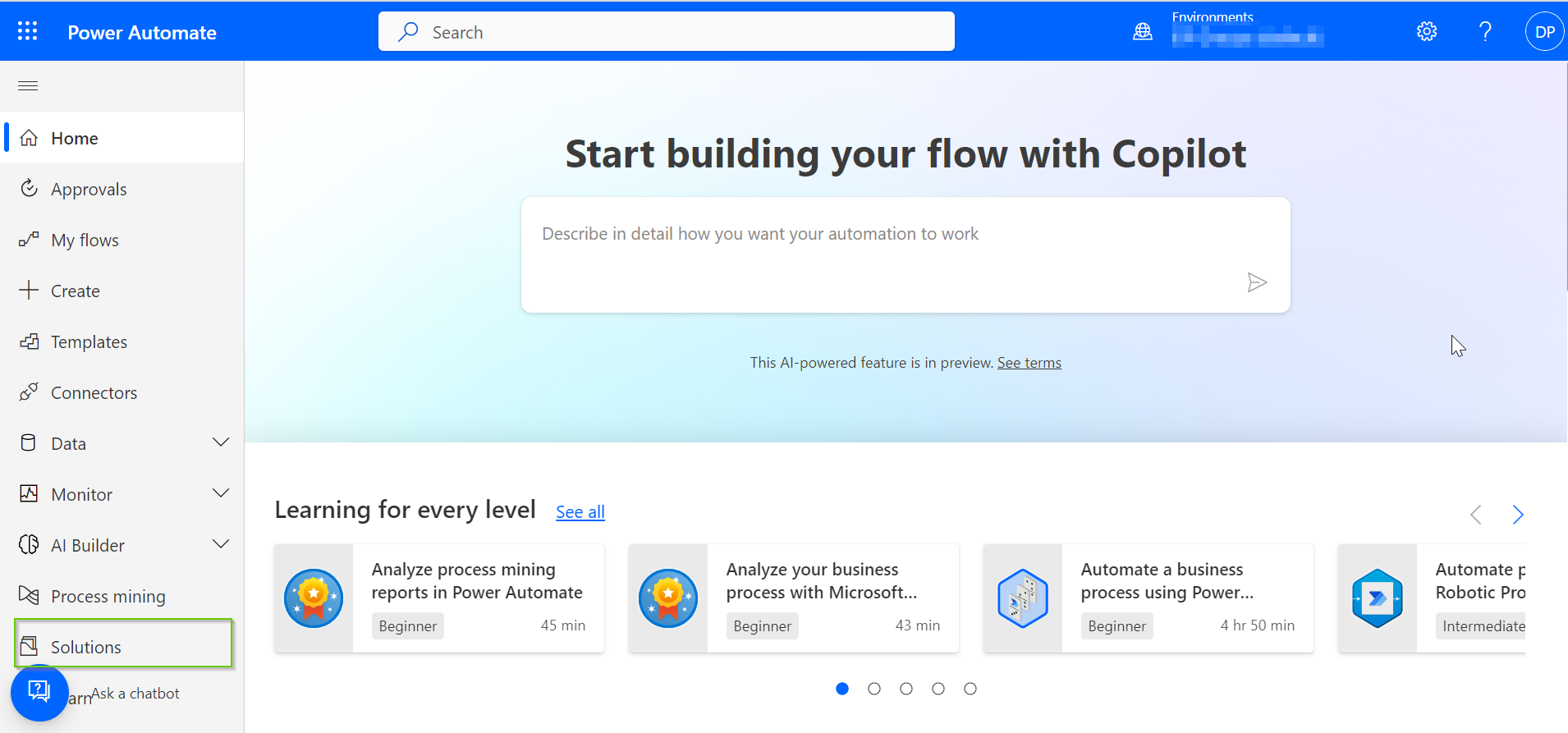
* Choose the environment in which the **Solution** is imported.
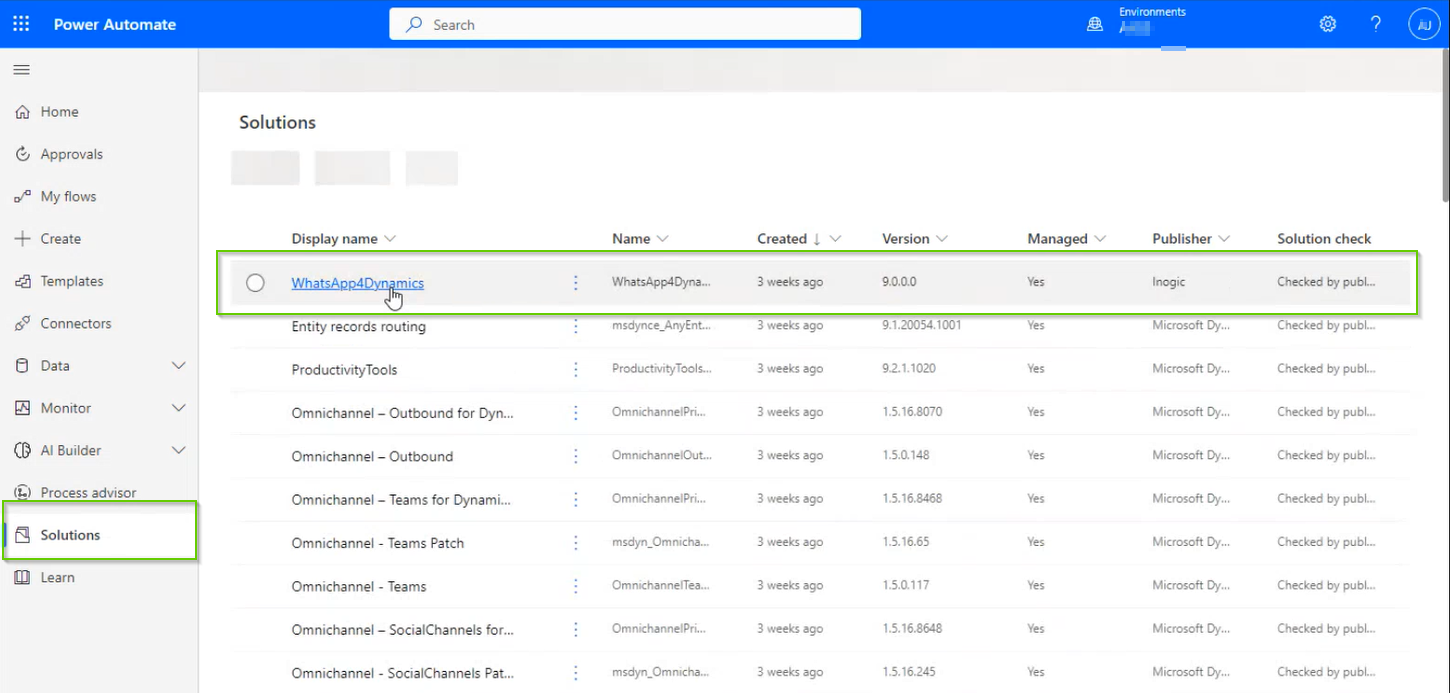
* In the list of **Solutions**, click **WhatsApp4Dynamics**.
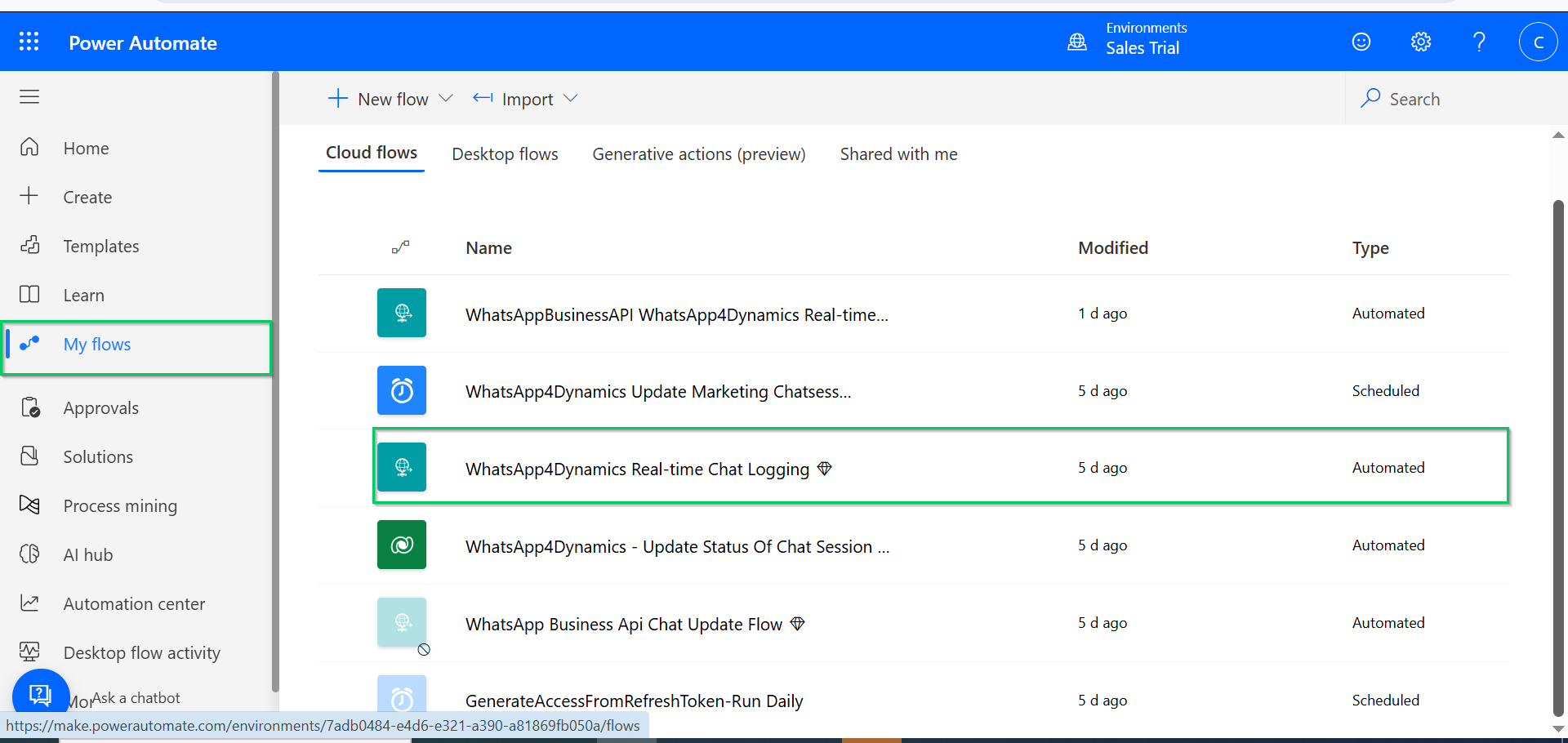
* WhatsApp4Dynamics Solution will open, then navigate to **My Flows** and click **Real-time Chat Logging.**
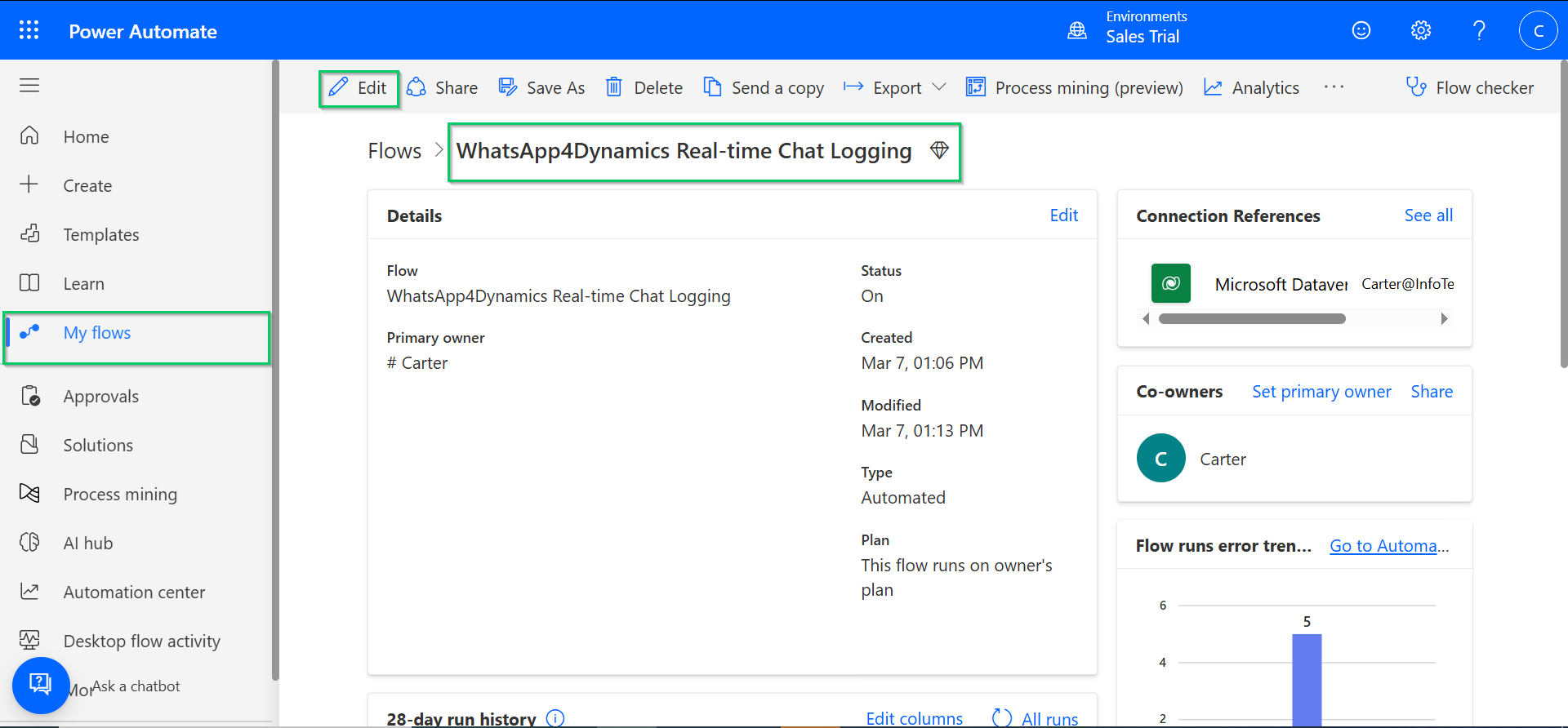
* Click on the **Edit button** inside **Real-time Chat Logging** in **My Flows.**
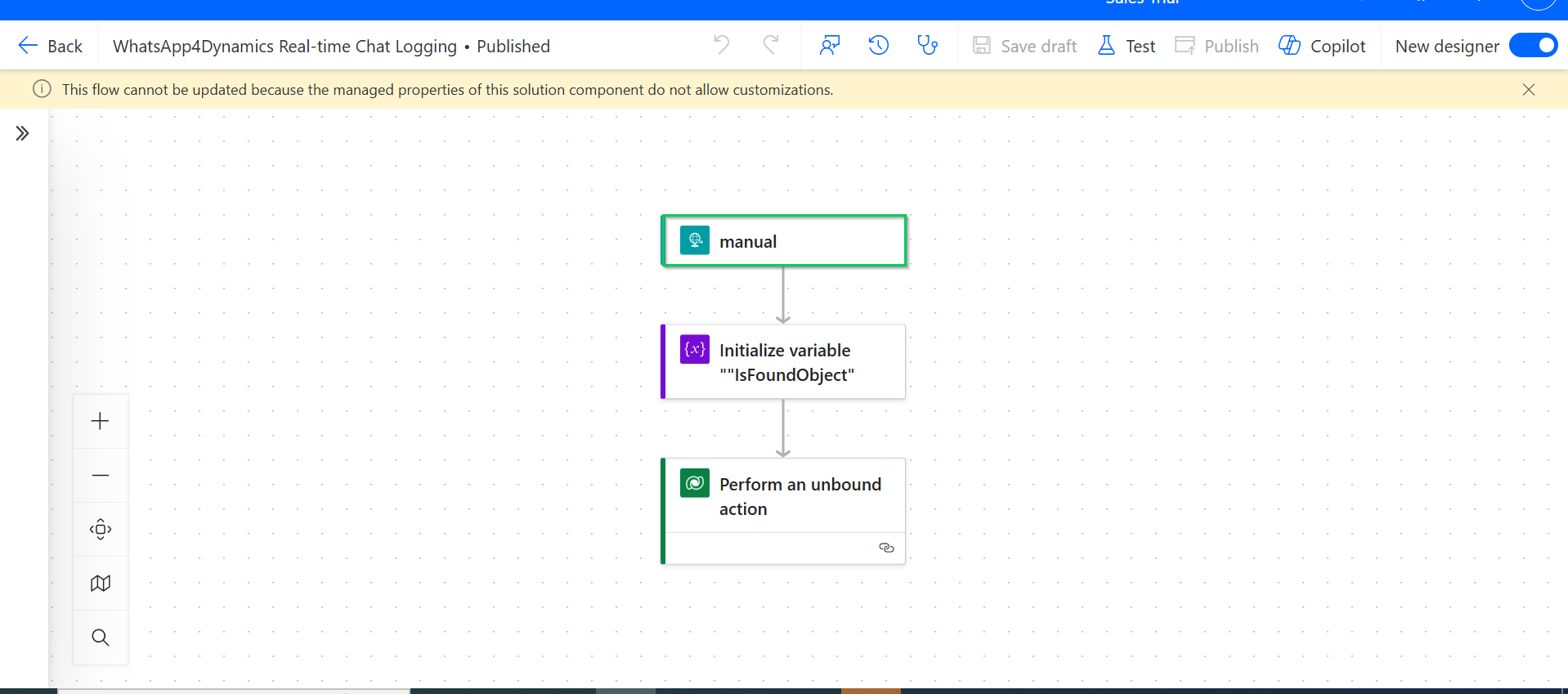
* When the flow opens, always click on the first step of the flow.
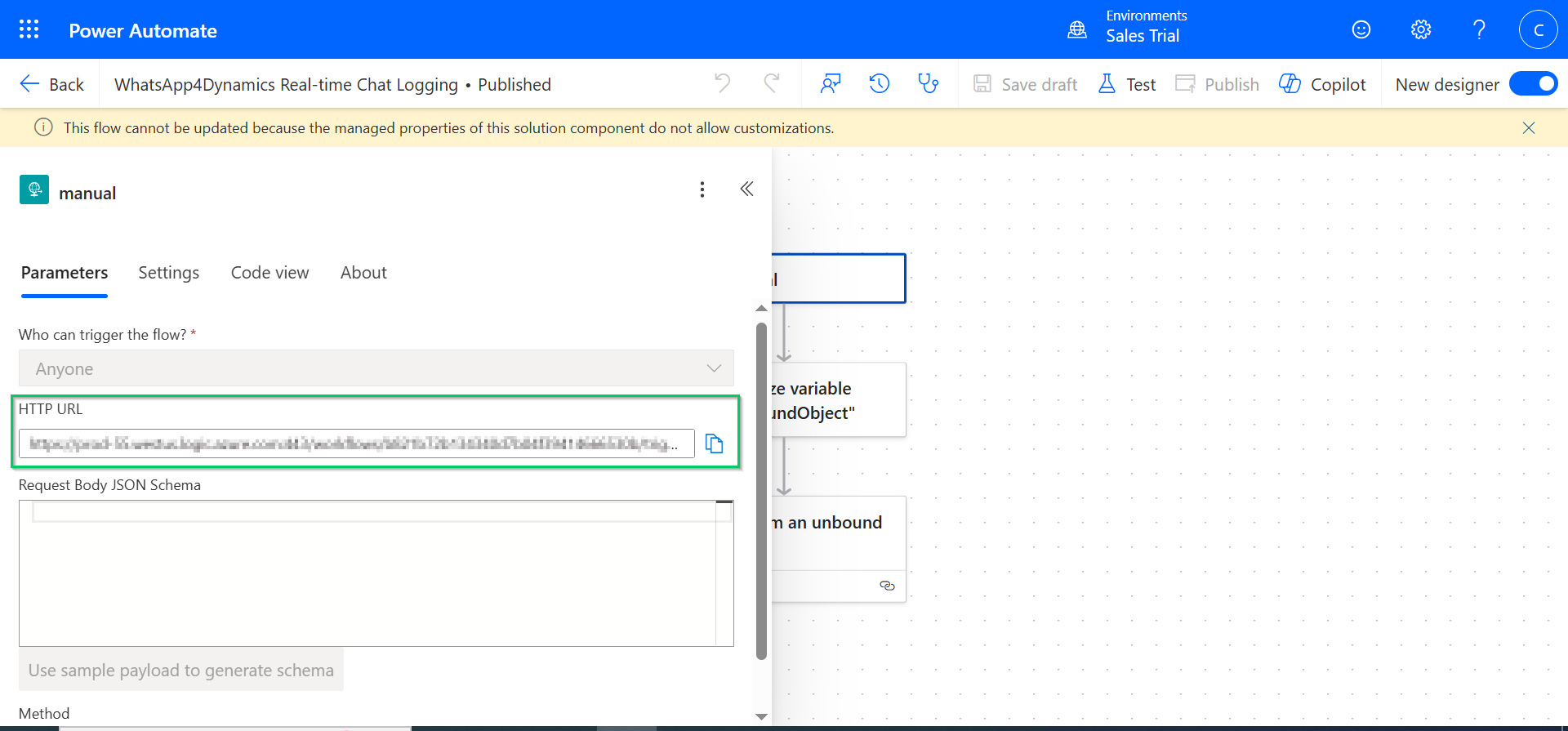
* Copy the **HTTP URL.**
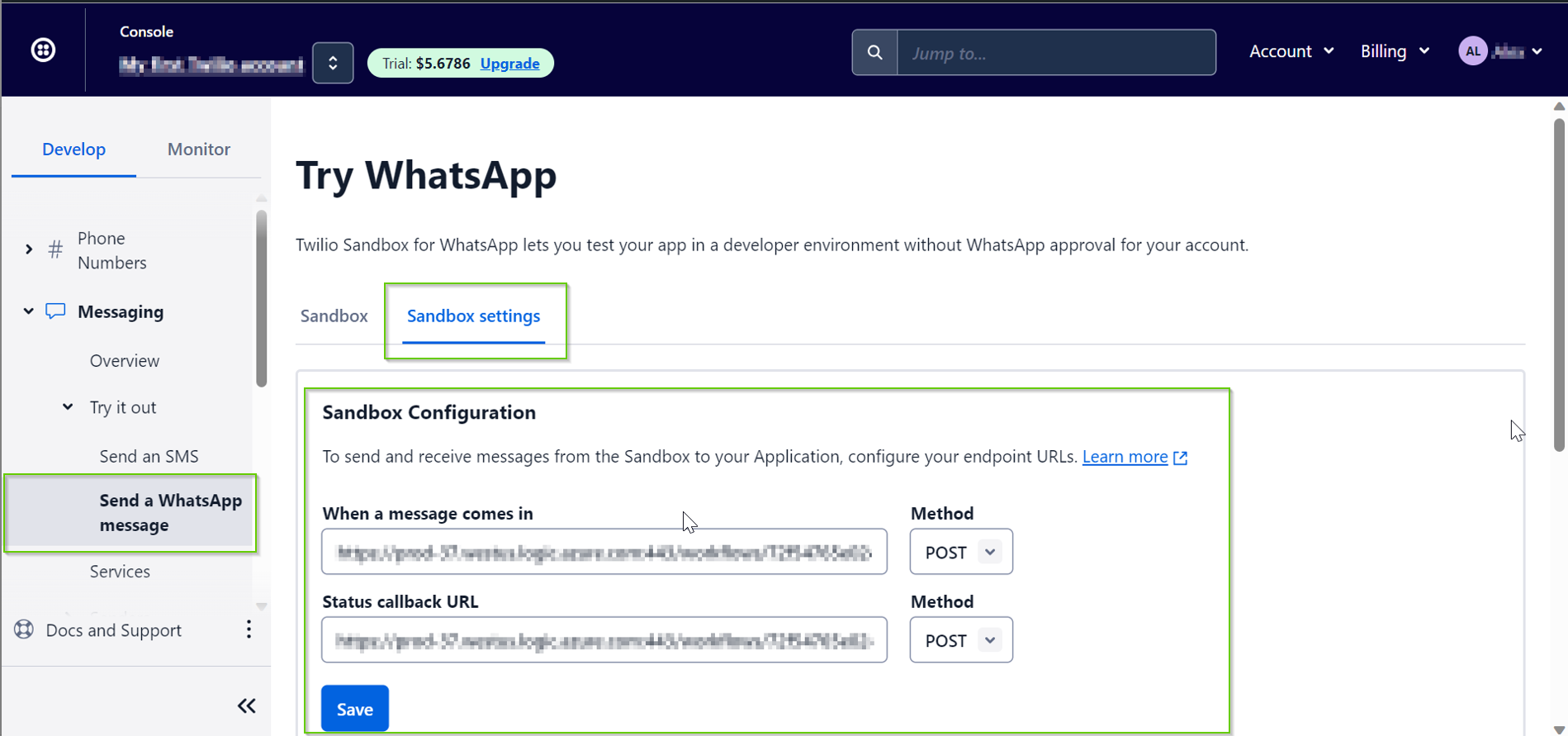
* Paste the URL in the **Sandbox Configuration** section to send and receive messages from the Sandbox to your Application.
* The same URL will be pasted on the “**When a message comes in**” section as well as the **“Status callback URL”**. The Method dropdown menu should be set to POST.
* Click **Save** to save the URLs pasted.
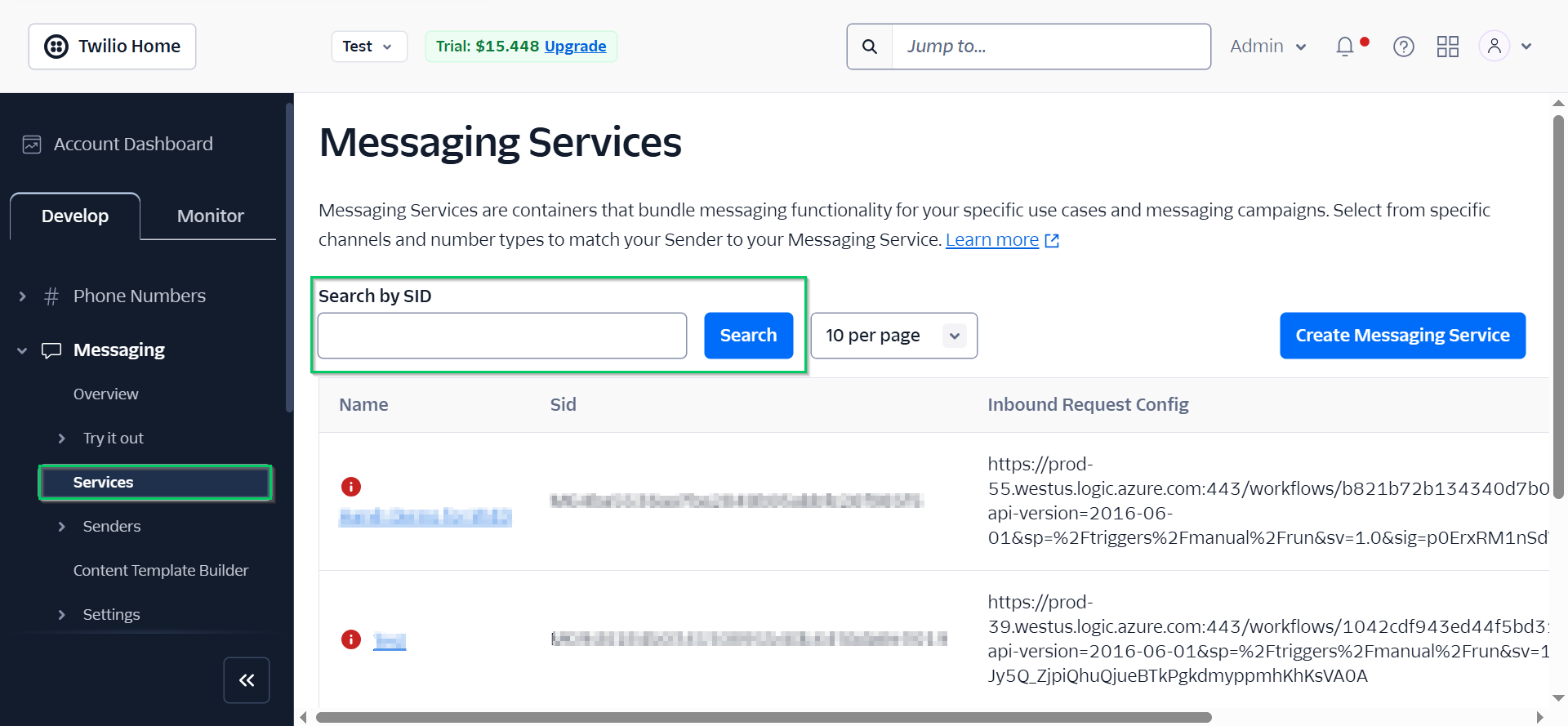
* Return to the **Twilio Home page.**
* Click on **Services** -> Select **Messaging Service SID**.
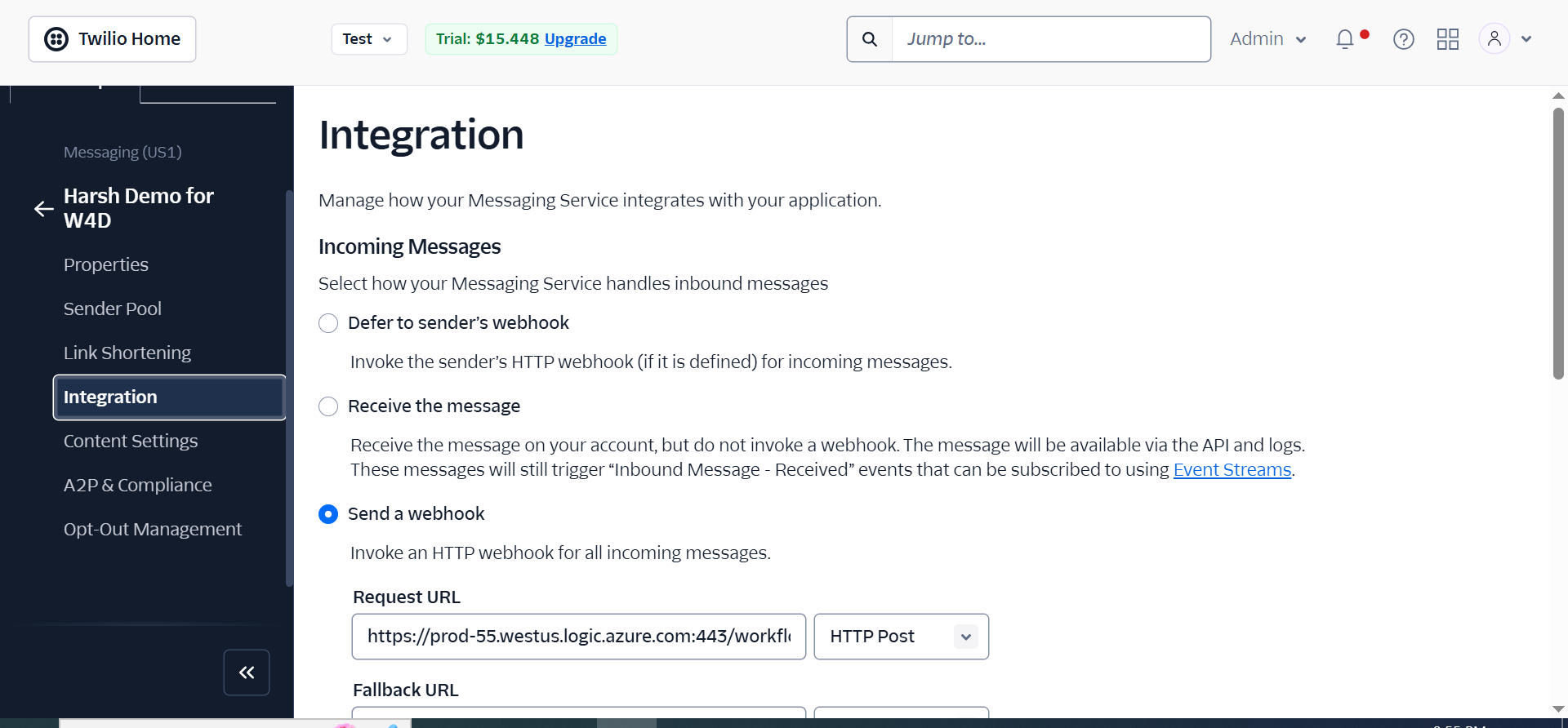
* A new **Sitemap** will appear -> Choose **Integration**.
* Select the **3rd option** – **Send a Webhook.**
* Paste the **HTTP URL** in the **Fallback** and **Request URL** fields. Both the Method dropdown tab should be set to **POST**.
* Also, paste the **HTTP URL** in the **Callback URL** field.
* Click **Save** and then **Validate**.
{% hint style="info" %}
**Note: It may take 1 or 2 minutes to validate, and you will receive a notification once the validation is complete.**
{% endhint %}
{% hint style="success" %}
For further queries, reach out to us at
{% endhint %}