> For the complete documentation index, see [llms.txt](https://docs.inogic.com/llms.txt). Markdown versions of documentation pages are available by appending `.md` to page URLs; this page is available as [Markdown](https://docs.inogic.com/whatsapp4dynamics/features/assign-chat.md).
# Assign Chat
The **Assign Chat** feature allows you to transfer an ongoing WhatsApp chat session to another team member directly within the chat interface. Whether a shift change is happening or specialized support is needed, this tool ensures customer interactions continue without disruption.
**Example:**
Mark, a sales executive, is chatting with a client but needs to leave for a meeting. He wants his teammate Martha to take over. Using the Assign Chat feature, he assigns the conversation to her in just a few clicks.
**How to Assign a Chat:**
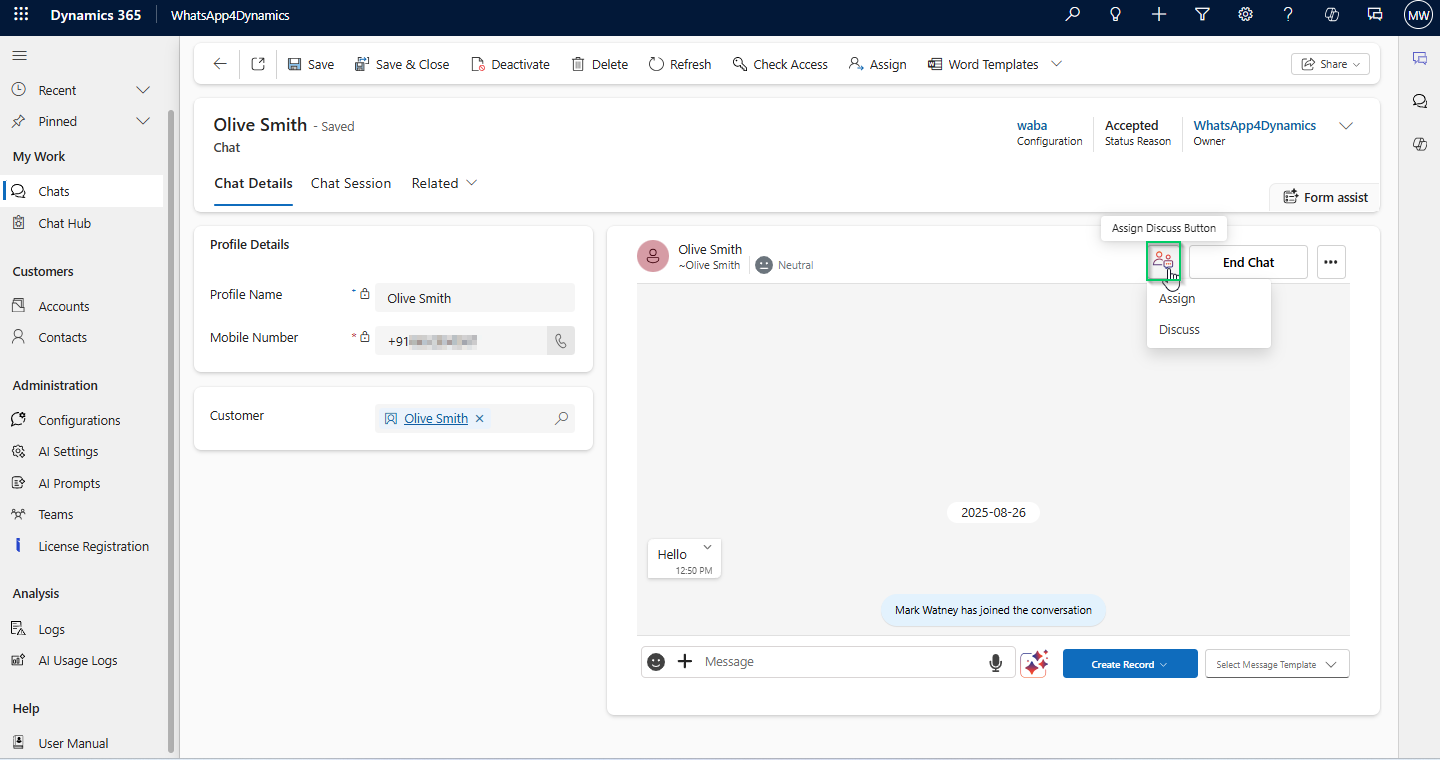
1. Click the **Assign/Discuss icon** within the chat.
2. Choose the **Assign** option.
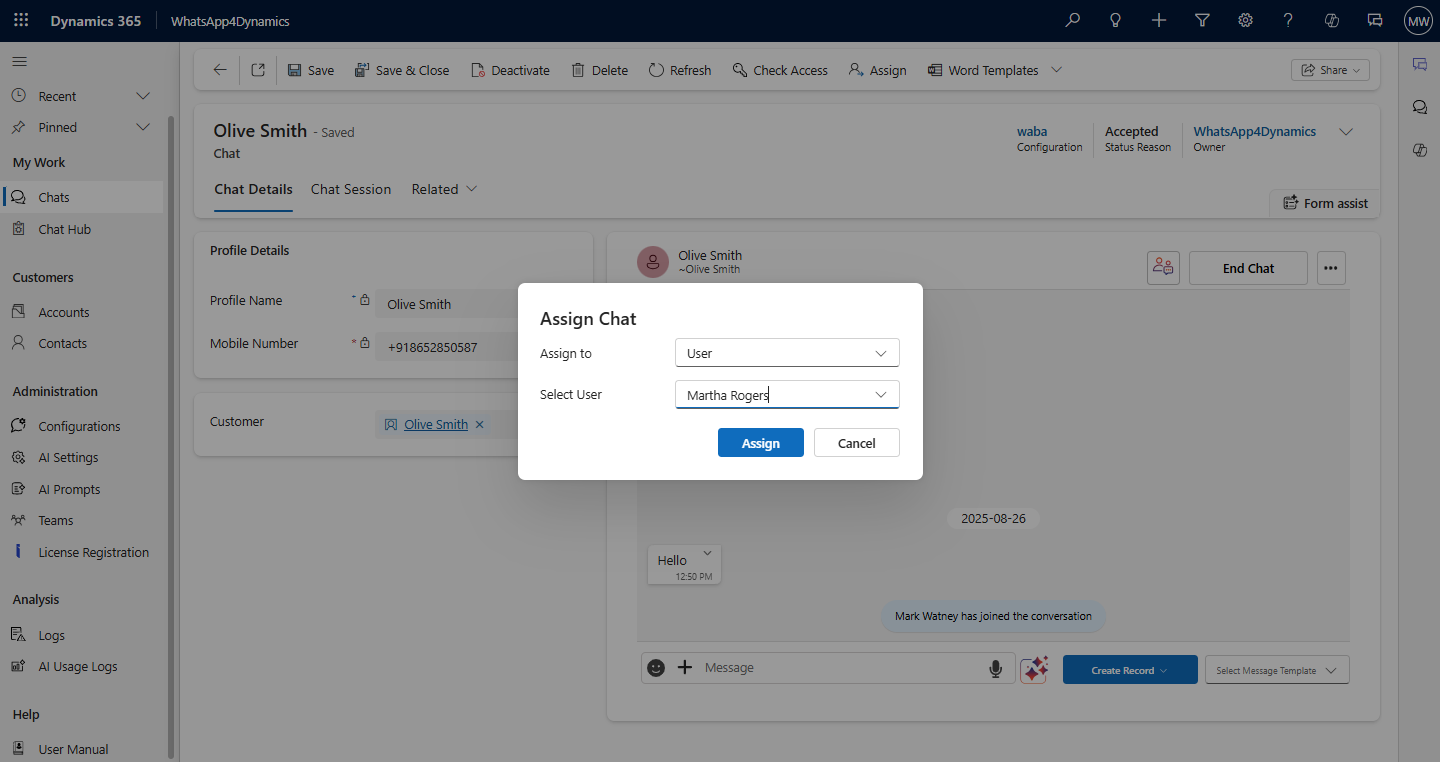
3. In the **Assign To** field, select the user type you wish to transfer the chat to (e.g., User or Manager).
4. In the **Select User** field, select the user you wish to transfer the chat to (e.g., Martha).
5. Click **Assign.**
What Happens Next:
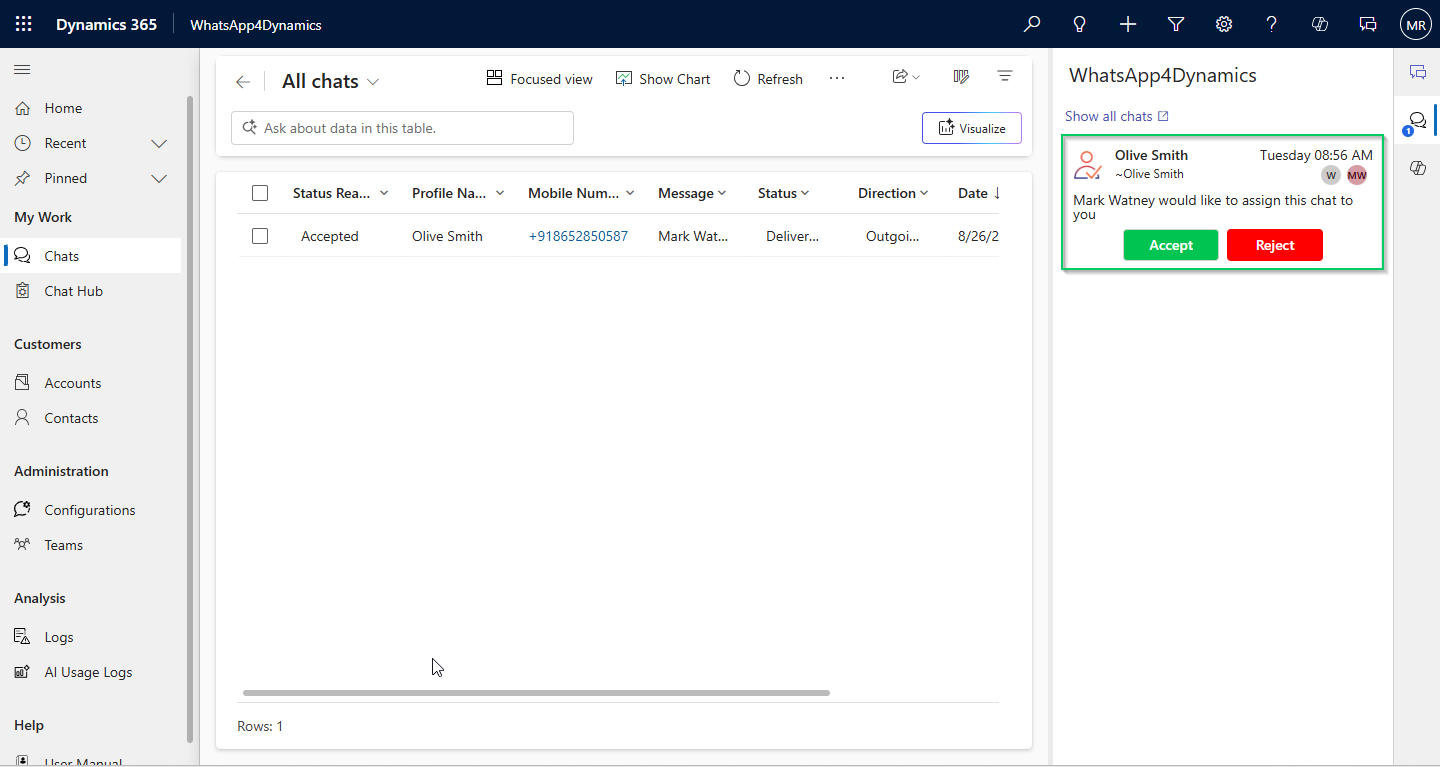
* Martha receives a notification: *“Mark has sent you a chat assignment request.”*
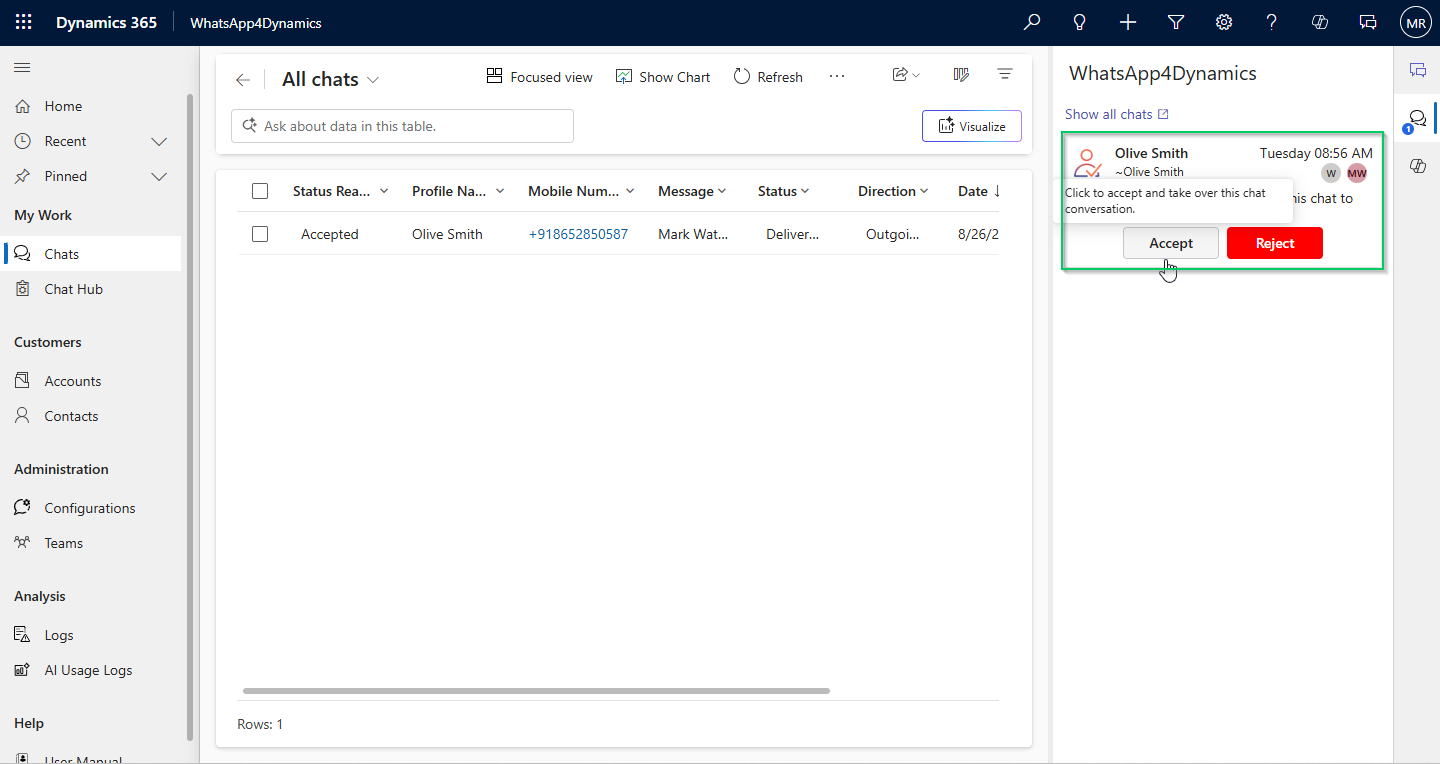
* She can choose to **Accep**t or **Reject** the request.
* If accepted, the chat is reassigned, and Martha can continue the conversation with the client.
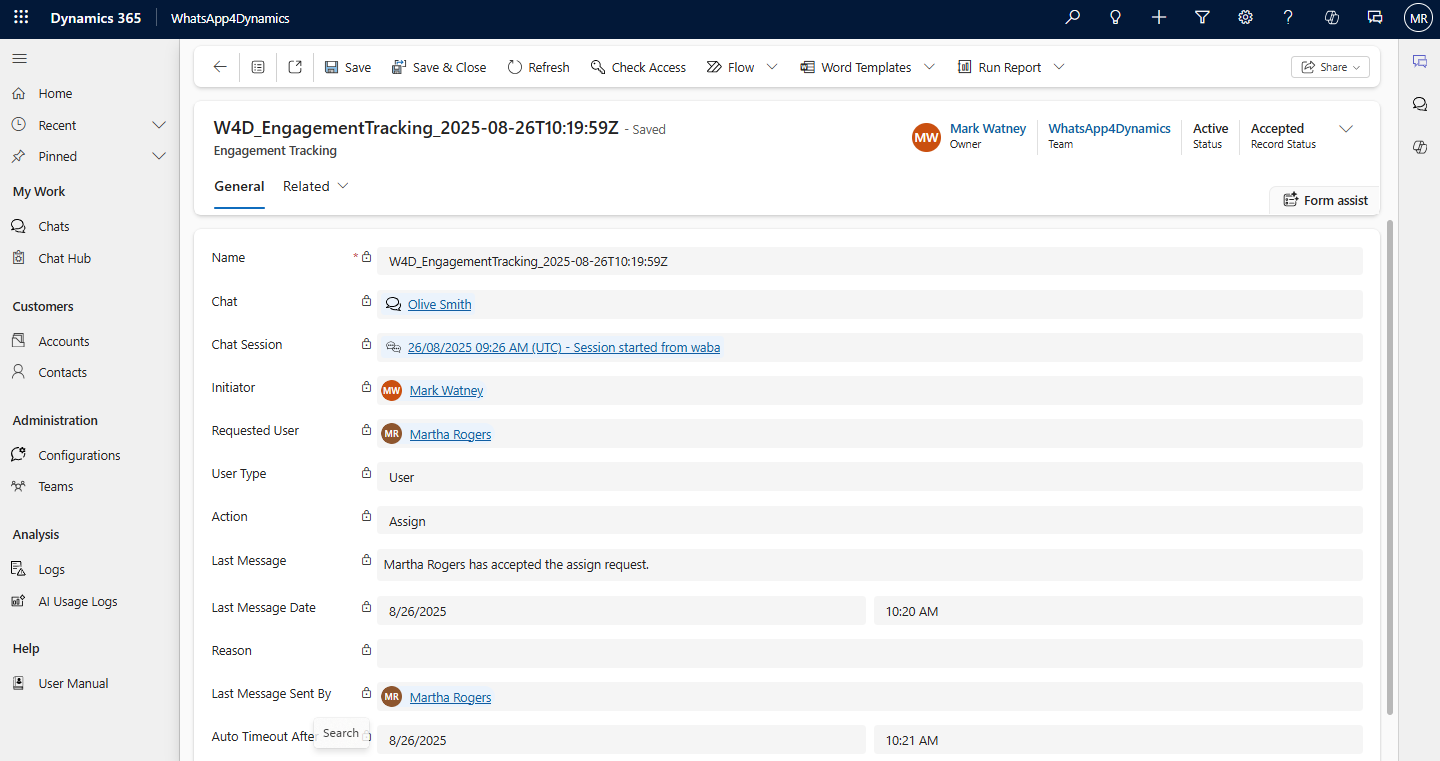
• A system-generated Engagement Tracking Record is always created automatically in the background and updated with all relevant details.
* **If Martha rejects the request**, a **popup will appear prompting her to provide a valid reason** for the rejection (e.g., *In a meeting*, *Not available*, *Handling priority issue*, etc.).
**Withdrawing a Request:**
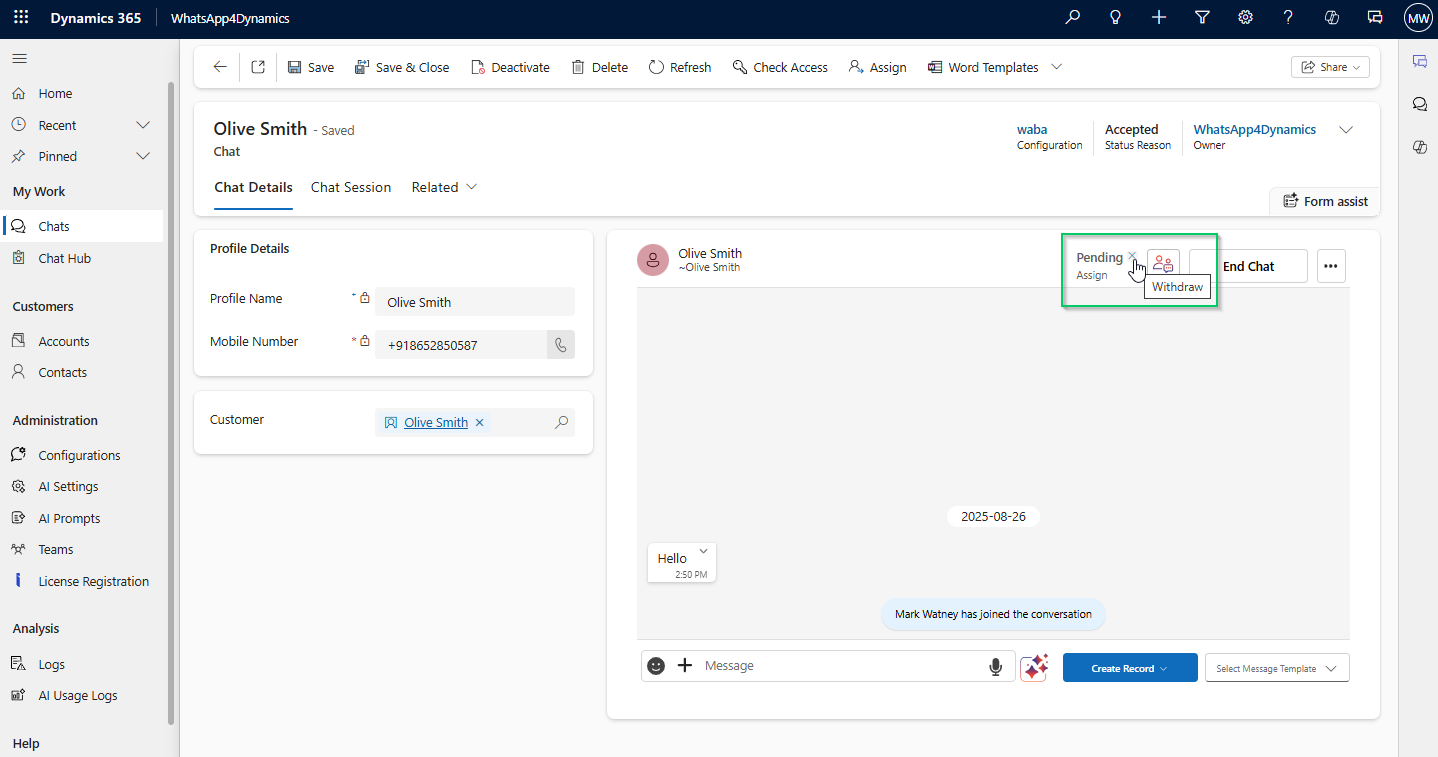
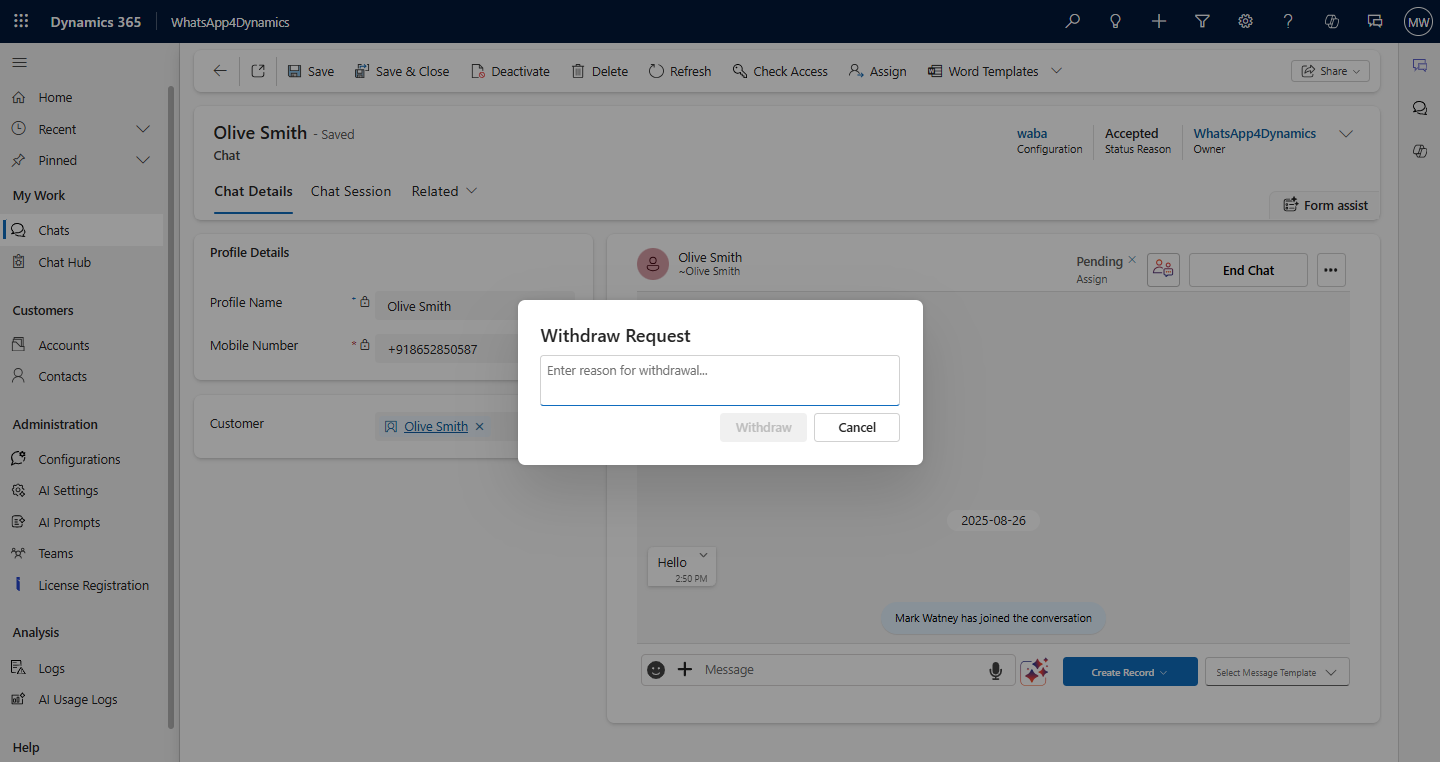
* If Mark decides to cancel or withdraw the assignment request before it is accepted or rejected, he can choose to withdraw the request.
* Upon withdrawal, a popup will appear, prompting Mark to provide a reason for canceling or withdrawing the request (e.g., *No longer needed*, *I resolved it myself*, etc.).
• Once withdrawn, the assignment is canceled or withdrawn, and the Engagement Tracking Record is updated accordingly.
**Auto Timeout for Requests**
* You can configure an auto timeout period in the CRM settings.
* If the recipient doesn’t respond within the configured time (e.g., 2 minutes), the request status will change to Timed Out, and the request will be canceled automatically.
* You can configure the timeout values from the Configurations section:
1. Go to **Configurations**.
2. Select the **WhatsApp Preferences** tab.
3. Under this tab, you’ll find a dedicated section called **Assign/Discuss Settings**.
**Assign Request Timeout Duration** – The duration after which a pending assign request will expire if not accepted or rejected.
#### **Quick Assign: Bulk Assignment Without Request**
**Note:**
* You can also directly assign chat sessions to other users without sending an assignment request by using the OOB (Out-of-the-Box) Assign button.
* Always prefer using this OOB Assign button over the Assign/Discuss button in the chat UI whenever you want to assign chat sessions in bulk.
*(For example, when an employee from your organization is leaving and wants to transfer or assign all their chat sessions to another user, they can directly use this feature.)*
How to Assign Chats Using the OOB Assign Button:
1\. Navigate to **Chats** → **Chat Sessions**.
2\. Select the chat sessions you want to assign by ticking the checkboxes next to them.
• Click on the three dots. Select Assign Chat Sessions from the dropdown.
• Choose the user you want to assign the chats to.
* Click Assign.
* The chat sessions will be assigned directly to the desired user without requiring any approval or additional requests.
* For example, assigning 50 chat sessions will create 50 Engagement Tracking Records—one per chat session.