> For the complete documentation index, see [llms.txt](https://docs.inogic.com/llms.txt). Markdown versions of documentation pages are available by appending `.md` to page URLs; this page is available as [Markdown](https://docs.inogic.com/deduped/features/scheduling/schedule-duplicate-detection-job.md).
# Schedule Duplicate Detection Job
With the DeDupeD app, you can schedule duplicate detection jobs to run and automatically detect duplicates on a daily, weekly, or monthly basis. As well as send the duplicate detection report link consisting of all the fetched duplicate records to the desired CRM users via mail.
**For example:** you can schedule a duplicate detection job to automatically run every month and detect duplicate contact records created throughout the month, and then mail the duplicate detection report to your desired users.
{% hint style="info" %}
**Note:** When using DeDupeD's CRM-based scheduling, duplicate detection jobs can process up to 10,000 records per execution. For bulk processing scenarios involving more than 10,000 records, we recommend using the DeDupeD Task Scheduler instead.
{% endhint %}
To create and schedule a duplicate detection job you will have to follow the steps given below:
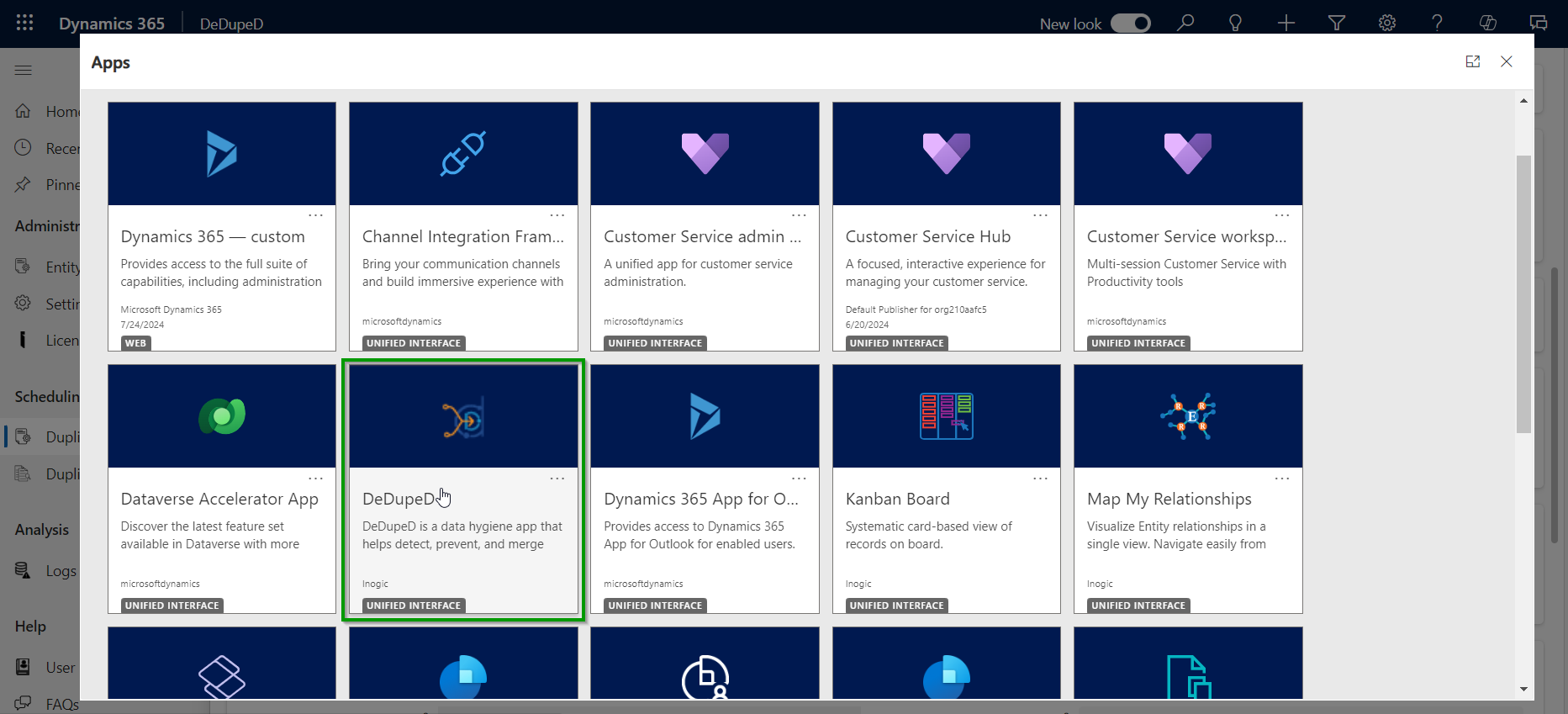
* Navigate to DeDupeD App.
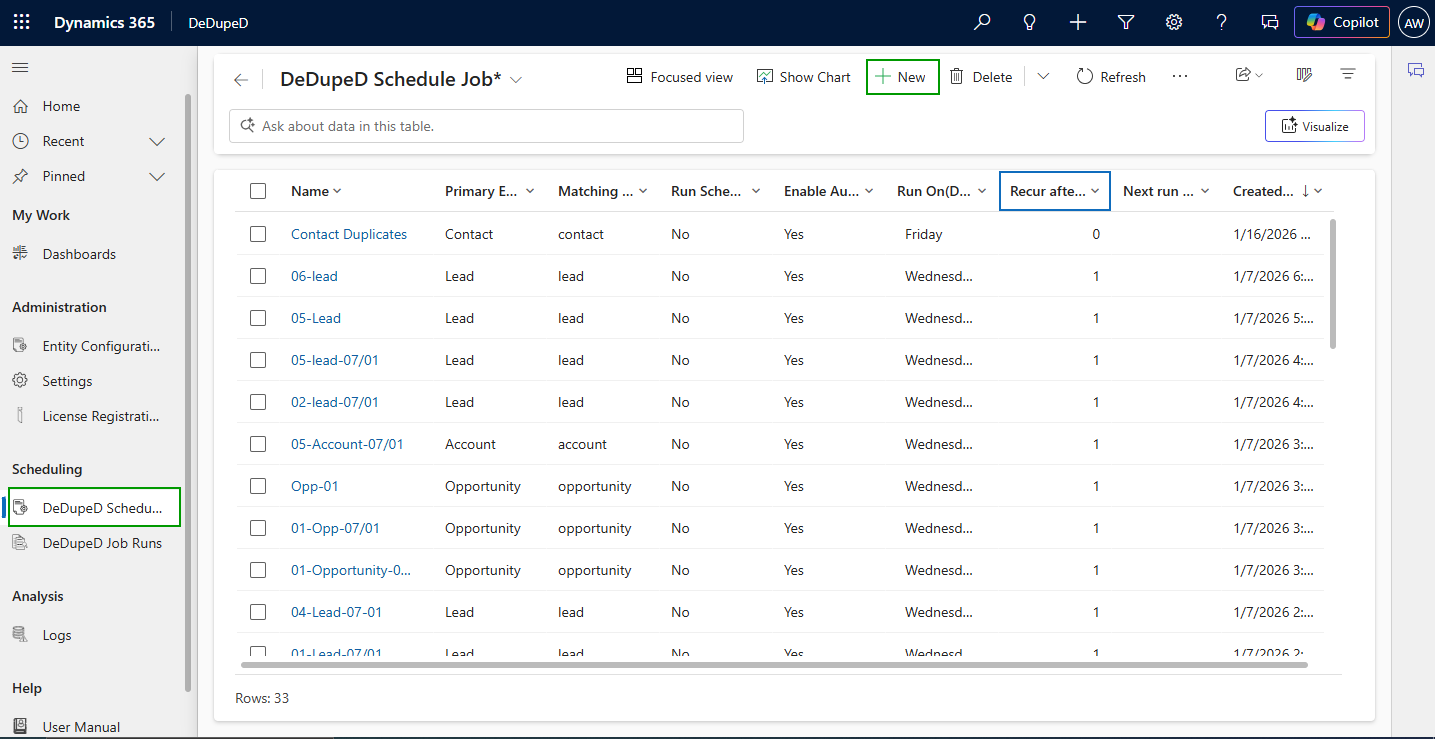
* Go to Duplicate Detection Job and click on **“New”** to create a new detection job.
* Now fill in the following details:
* **Name:** Give a suitable name for the Duplicate Detection Job.
* **Entity Configuration:** Select the entity for which you want to run the Duplicate Detection Job.
* **Primary Entity:** Select the primary entity for which you want to set up the duplicate detection job to run. For e.g. Here we will select **‘Contact’.**
* **Matching Entity:** Select the entity from which the duplicates will be retrieved. For e.g. Here we will select the **‘Contact’.**
* **Selective Rule Execution:** Choose which published Duplicate Matching Rules will run as part of this scheduled job. Only the selected rules will be used during duplicate detection. If no rules are selected, all published rules will be executed based on entity configuration.
* **Notify Me (Email):** Set this field to **“Yes”** if you want to send an email notification with a link to the duplicate detection job reports to the record owner.
* **Notify Others:** Select the CRM users to whom the results of the duplicate detection job will be sent along with the record owner.
* **System Views:** Select the entity view from which you want to detect duplicates.
* **Last X (Days):** Select the last X days from where the duplicate records should be retrieved. Here, we will set it as 30 days.
* **Based On:** Select the duplicate detection criteria based on which the duplicate records will be fetched from the selected entity view.
* **Hour:** Set the hour at which the scheduled job should run. Here, we will set it at **‘15’.**
* **Run On:** Set the Day on which the scheduled job will run. Here, we will set it on **‘Friday’.**
* **Minute:** Set the minute when the scheduled job will run. Here, will set it as **‘30’.**
* **Recur after every (Week’s):** Set the number of weeks after which the scheduled job will run. Here we will set it run after every **‘4’** weeks.
Once you have filled in all the details, click on **‘Save’.**
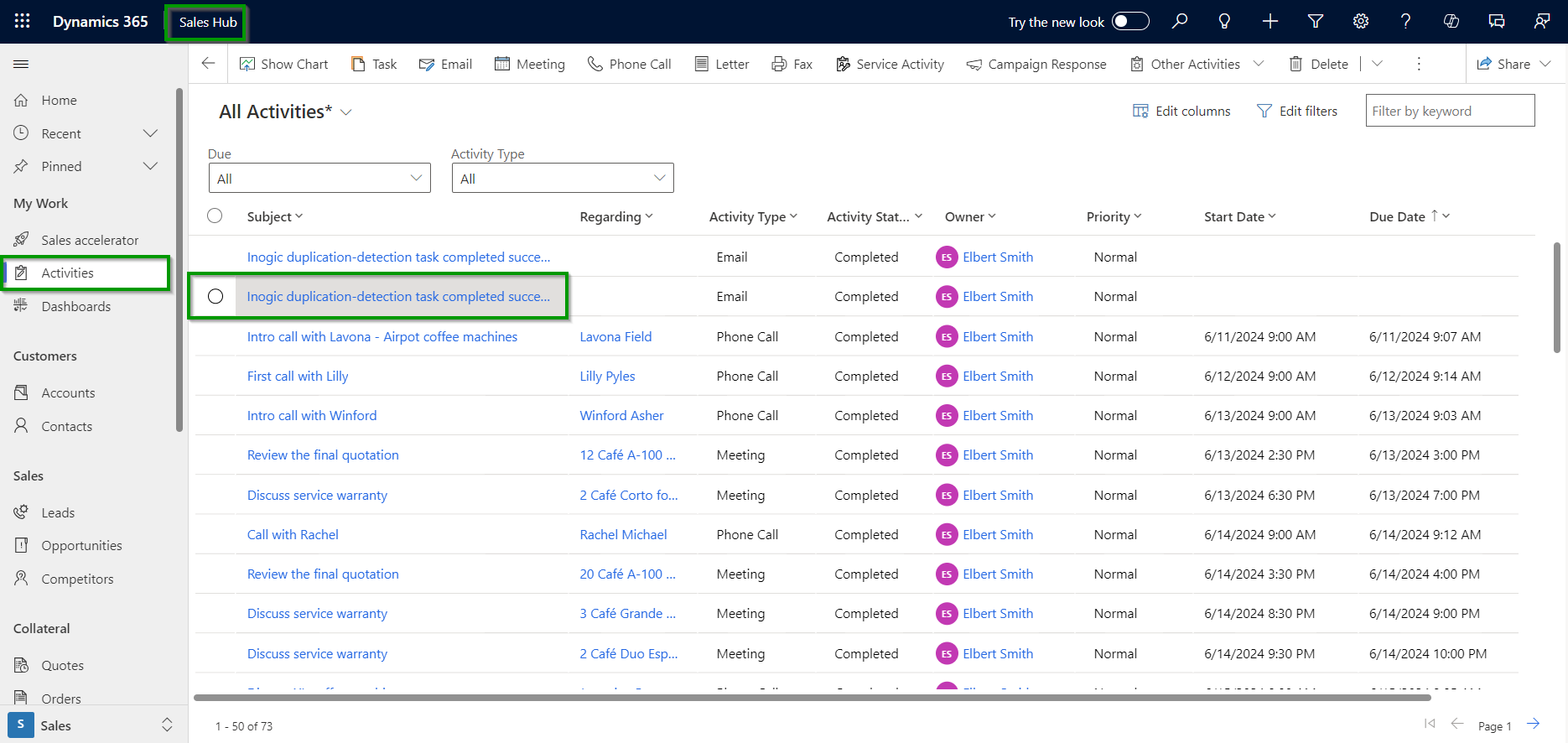
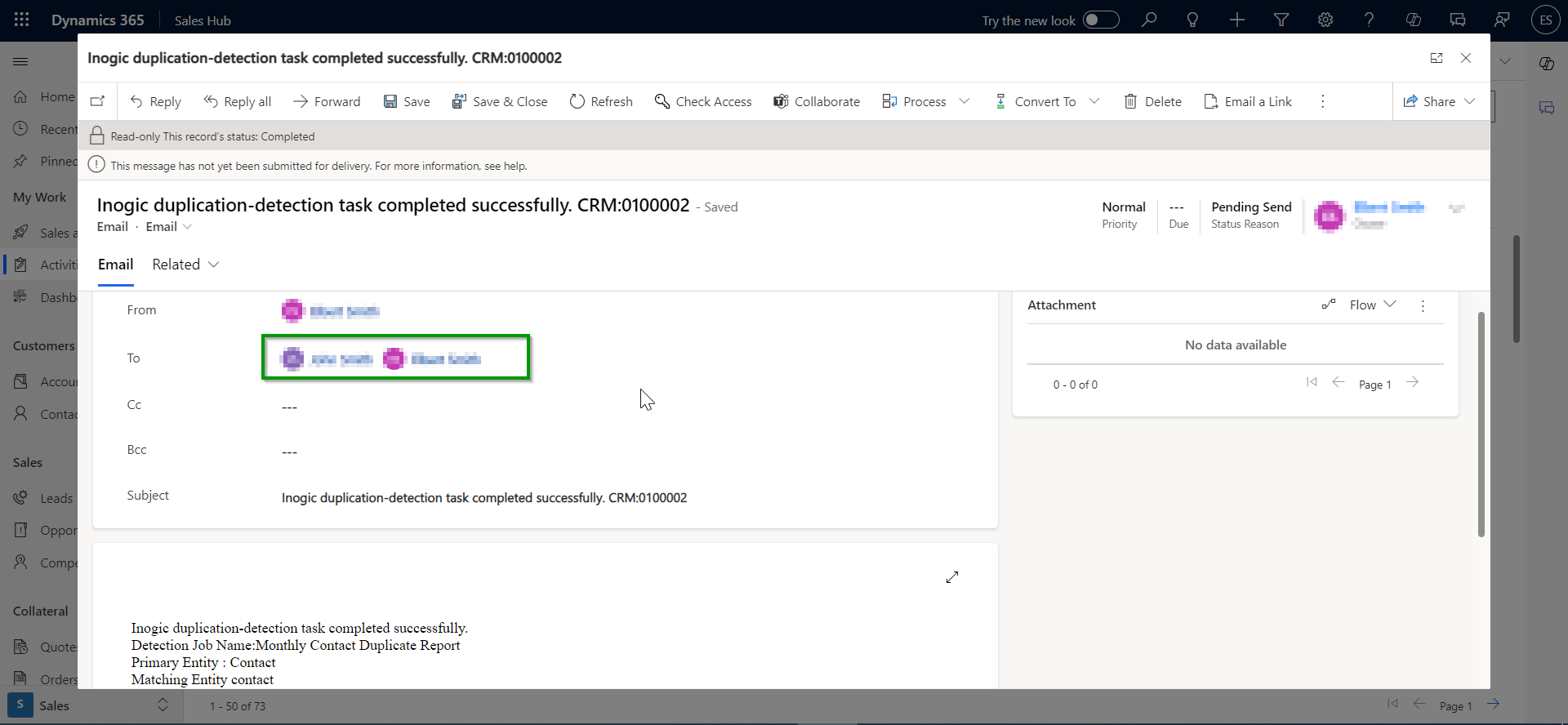
* Now, once your scheduled Duplicate Detection Job has been executed. You will be able to see the scheduled Job’s results being mailed to your selected users:
* Navigate to **Sales Hub -> Activities ->** Click on the **E-Mail.**
* Automatic Mail has been sent to your desired users.
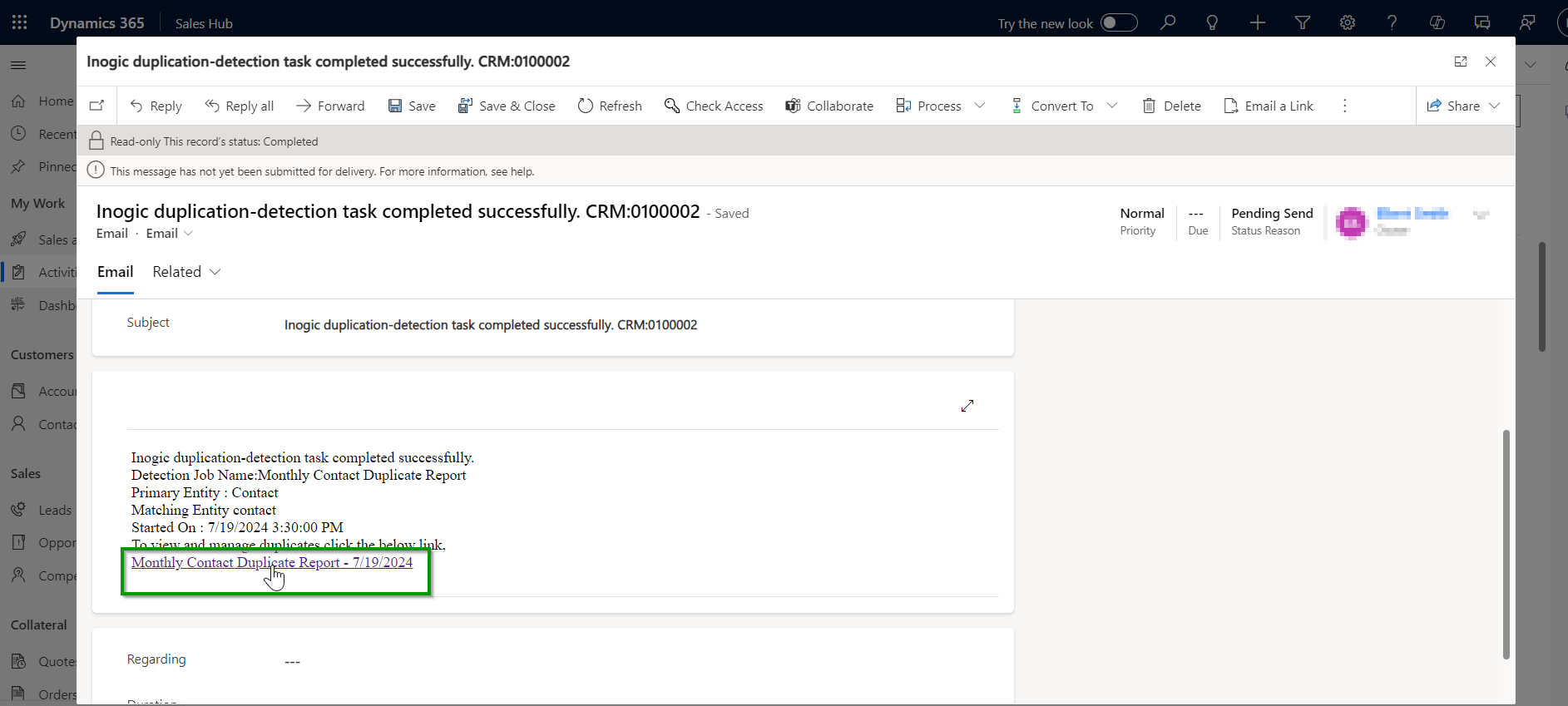
* Scroll down and you’ll find link for the duplicate detection job’s results. Click on this link and it will redirect you to the **‘Duplicate Job Run’** entity.
* Here you will find all the duplicate records detected through the scheduled duplicate detection job.
This is how you can schedule duplicate detection job and mail it’s results to desired users with DeDupeD App.
## Scheduled Auto-Merge
**Auto-Merge via Scheduled Jobs**
The Auto-Merge feature allows DeDupeD to automatically detect and merge duplicate records in bulk, on a scheduled basis, without any manual intervention.
Once configured, DeDupeD continuously keeps your CRM clean by:
* Finding duplicates based on your rules
* Selecting the best Master record
* Merging duplicates automatically
* Preserving all relationships, history, and activities
* Producing a full audit trail of every merge
This is set-and-forget data hygiene for Dynamics 365.
What Auto-Merge Solves
Most CRM systems fail because duplicates keep getting created after cleanup.
DeDupeD Auto-Merge ensures:
* New duplicates are merged as soon as they appear
* Data never drifts back into chaos
* Users never have to manually fix the same customers again
It is especially powerful for:
* Accounts
* Contacts
* Leads
* Any entity that is created at scale
**How to Configure Auto-Merge in DeDupeD**
**Step 1 – Create a Scheduled Job**
Go to:\
DeDupeD → DeDupeD Schedule Jobs → New
Enter:
* Job Name (e.g., *Jan Month Duplicates*)
* Entity Configuration (e.g., Account, Contact)
**Step 2 – Choose the Entities**
Select:
* Primary Entity (e.g., Account)
* Matching Entity (e.g., Account)
This defines what DeDupeD compares to find duplicates.
**Step 3 – Select Duplicate Matching Rules (Selective Rule Execution)**
Choose:
* The specific published Duplicate Matching Rule(s) that should run for this job (e.g., Email, Phone).
* By default, all published rules for the entity configuration will be executed, giving you full duplicate coverage right out of the box.
This lets you use stricter matching rules for Auto-Merge, while broader rules can still be used elsewhere for duplicate identification and review. Applies to both the CRM's internal scheduler and the Windows Task Scheduler
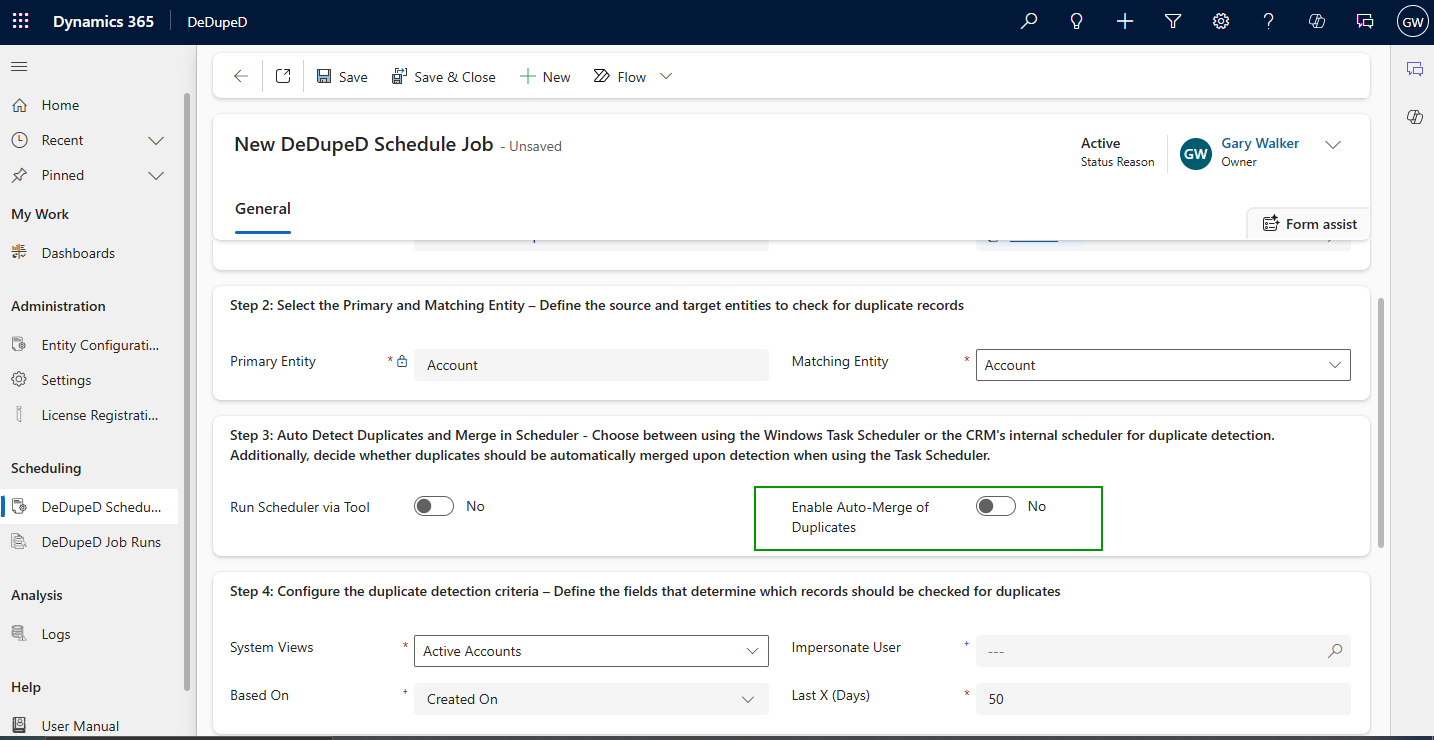
**Step 4 – Enable Auto-Merge**
Turn on:
Enable Auto-Merge of Duplicates = Yes
This tells DeDupeD:
Any duplicates found by this job should be merged automatically, no review required.
This is the switch that turns DeDupeD into a fully autonomous deduplication engine.
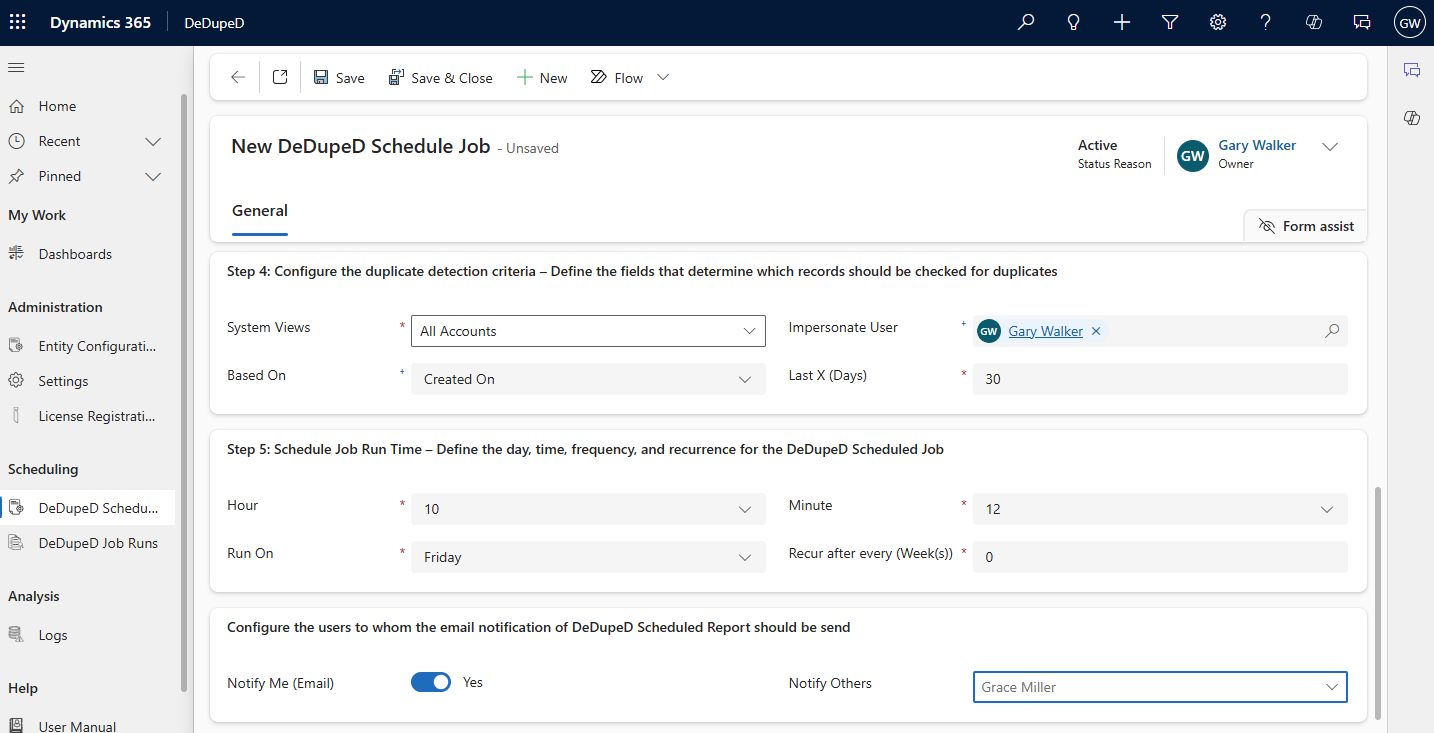
**Step 5 – Define which records should be checked**
Configure:
* System View (e.g., All Accounts)
* Based On (e.g., Created On)
* Last X Days (e.g., 30 days)
* Impersonate User (who runs the job)
This allows you to control:
* Which records are scanned
* Which user context is used
* Which time window is processed
**Step 6 – Schedule the Run**
Define:
* Hour
* Minute
* Day
* Weekly recurrence
Example:\
Run every Friday at 10:12 AM.
This makes DeDupeD execute duplicate detection and merging automatically on that schedule.
**Step 7 – Configure Email Notifications**
Choose:
* Notify Me
* Notify Other Users
So stakeholders receive a report of:
* Records processed
* Duplicates found
* Records merged
**What Happens When the Job Runs**
Once the scheduled time arrives:
1. DeDupeD scans records based on your rules
2. Finds duplicates using matching rules and logic
3. Picks the best Master record based on advanced master deciding rules satisfaction criteria
4. Merges all duplicates automatically based on merge rules
5. Moves all relationships, activities, files, and history
6. Deactivates the duplicates
7. Logs everything
No clicks. No risk. No data loss.
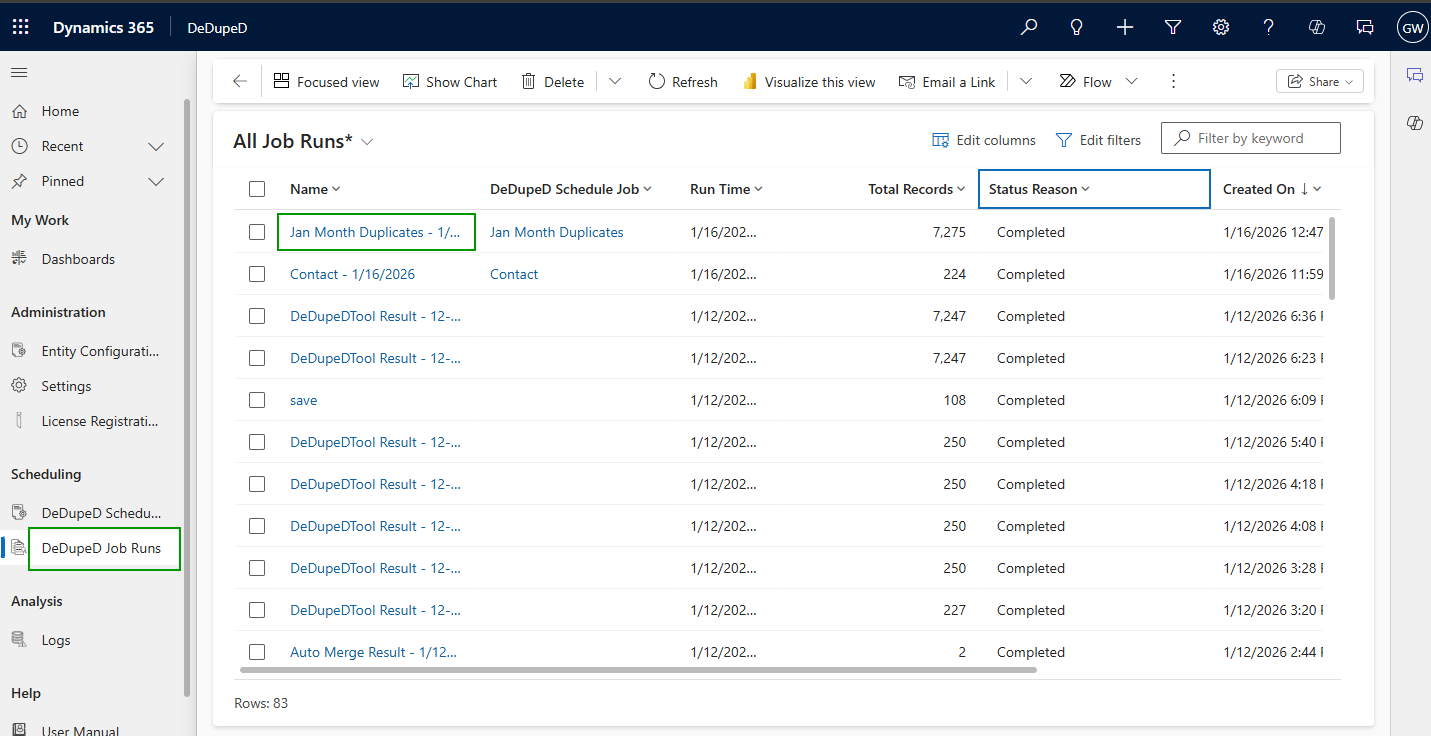
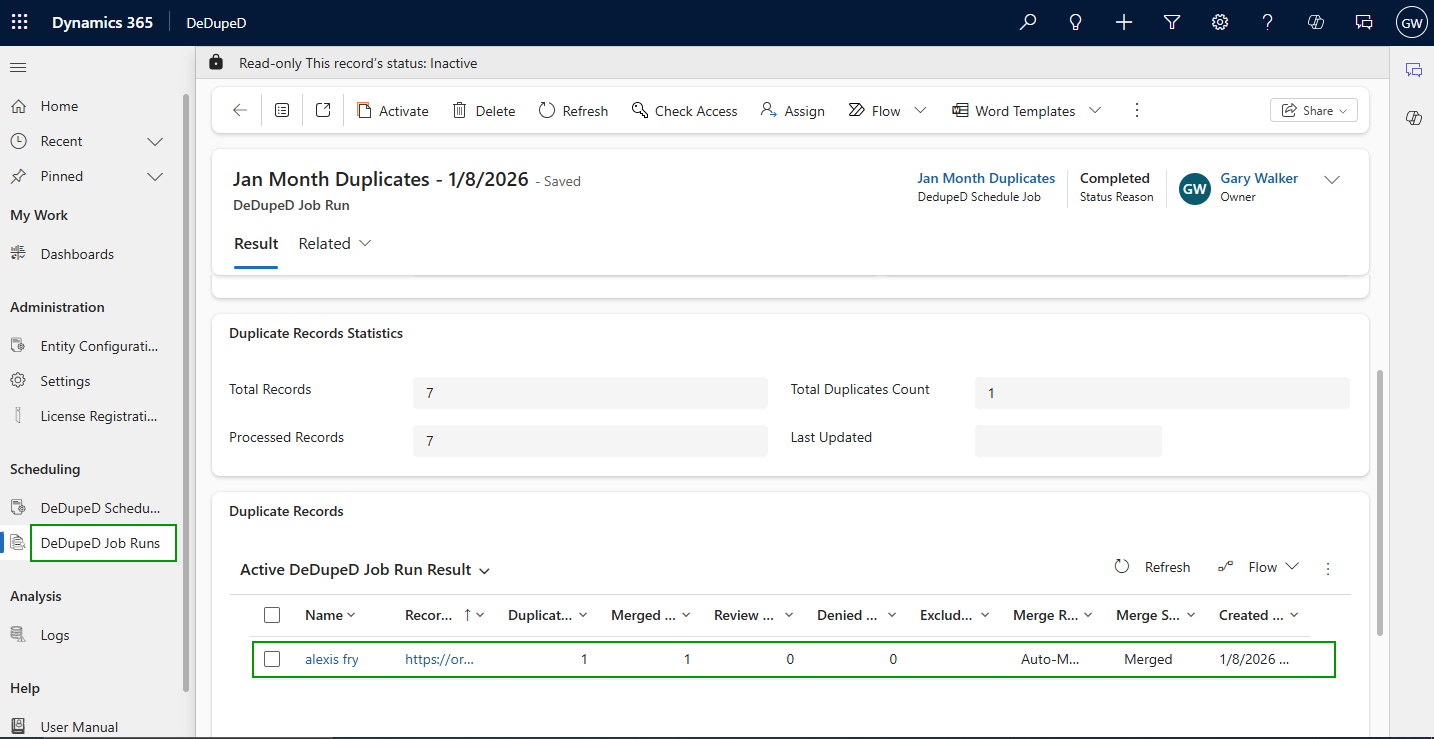
**How to Review Auto-Merge Results**
Go to:\
DeDupeD → DeDupeD Job Runs
Each run shows:
* Run time
* Total records checked
* Total duplicates found
* Total records merged
* Status
Open any Job Run to see:
* Each master record
* How many duplicates were merged
* Whether it was auto-merged or manual
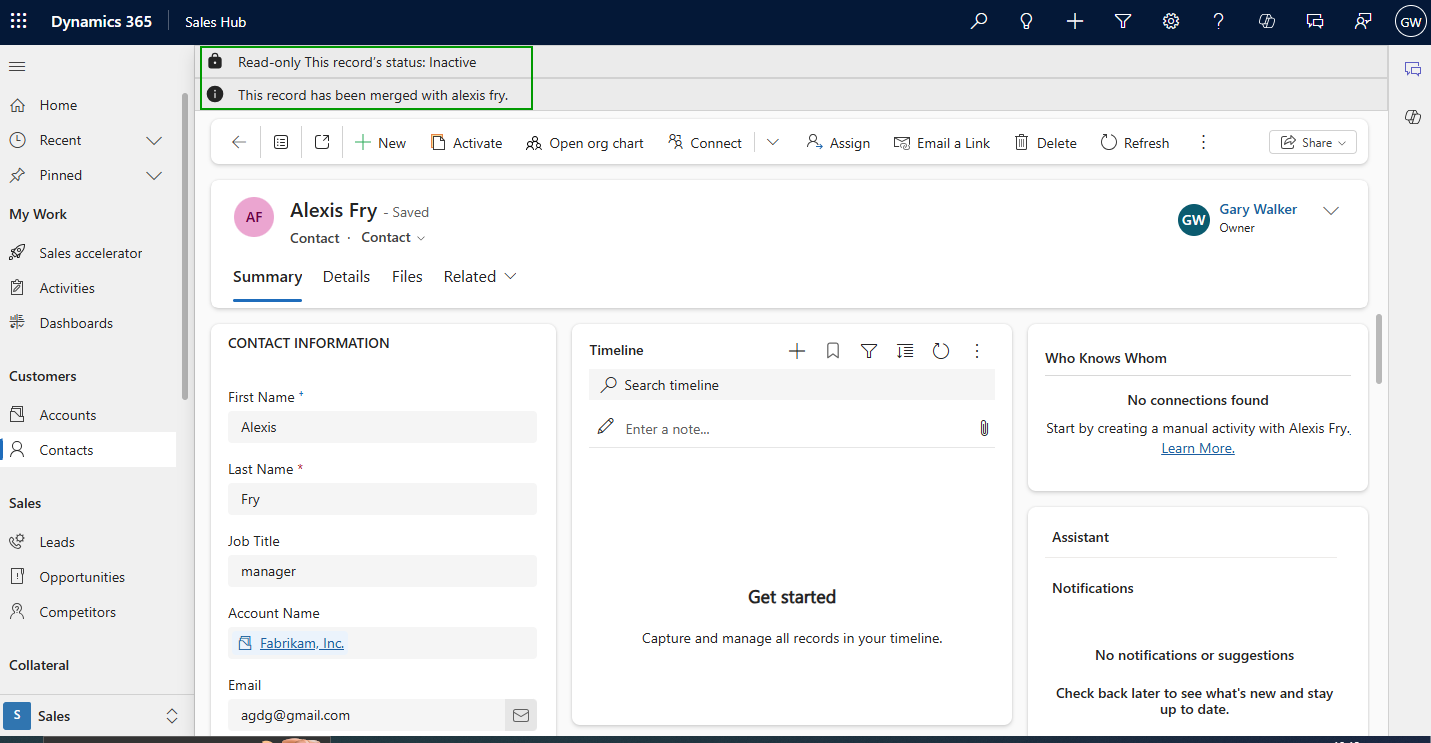
**How to Verify Auto-Merge Result in CRM**
Open any record that was merged.
You will see:
“This record has been merged with \[Master Record]”
The duplicate is:
* Inactive
* Fully merged
* All data preserved
{% hint style="success" %}
For further queries, reach out to us at
{% endhint %}